Test News
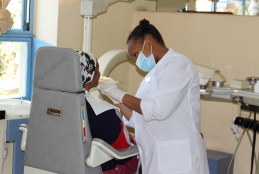
Fourth year undergraduate students being trained on how to conduct endodontic procedures at the phantom head skills…
- Read more about Test News
- Log in to post comments
Fourth year undergraduate students being trained on how to conduct endodontic procedures at the phantom head skills…
Bovine leukosis infection (EBL) is a worldwide occurring disease of cattle caused by the bovine leukemia virus and is clinically characterised by the occurrence of multiple lympho-sarcomas in about 10% of the infected cattle. In Africa, the prevalence of Bovine leukosis infection has been reported in Namibia, Egypt, South Africa, Uganda and Tanzania. In Kenya, cases of bovine lympho-sarcomas have been reported but the incidence, prevalence and distribution of the disease in the country remain unknown.
This study dwelt on the role adoption of green concept plays in environmental management and implementation of sustainable development goals in Kenya. This was studied using the case of Nairobi County. The theoretical framework was based on the institutional and resource-based theory where the coercive push and resource benefits for society were expected to influence the adoption of the green concept.
Sengis are eutherian insectivores belonging to superorder Afrotheria, a recently defined clade of mammals that diverged from other placentals over 100 million years ago. In this study, a histological and ultrastructural analysis was carried out on the olfactory mucosa (OM) of the rufous sengi (Elephantulus rufescens) and the data were compared with those reported earlier in the dog (Canis familiaris) and the sheep (Ovis aries), whose dietary lifestyles are carnivorous and herbivorous, respectively.
The ixodid tick Rhipicephalus appendiculatus is the main vector of Theileria parva, wich causes the highly fatal cattle disease East Coast fever (ECF) in sub-Saharan Africa. Rhipicephalus appendiculatus populations differ in their ecology, diapause behaviour and vector competence. Thus, their expansion in new areas may change the genetic structure and consequently affect the vector-pathogen system and disease outcomes. In this study we investigated the genetic distribution of R.